

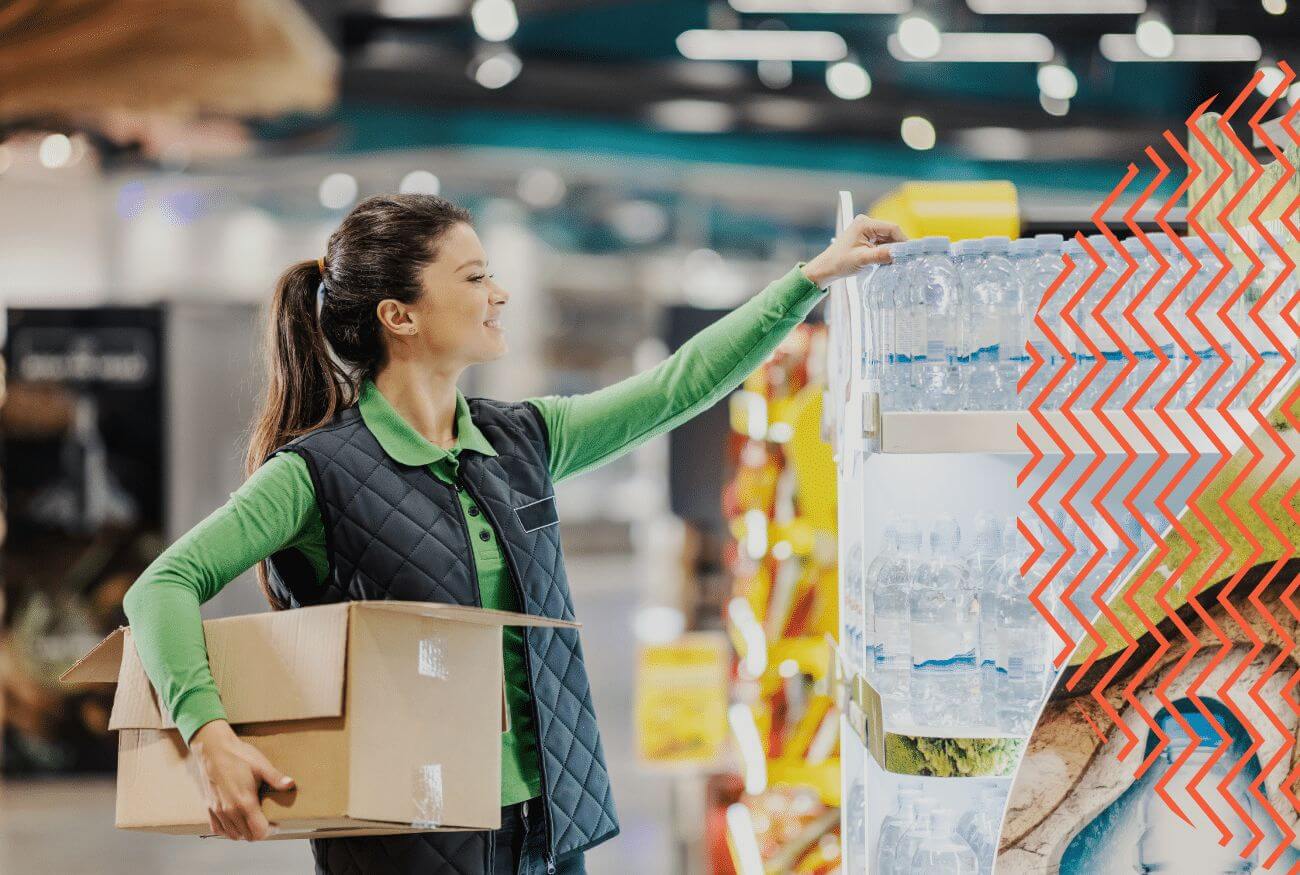
A retail merchandiser is responsible for ensuring products are displayed, stocked, and promoted effectively in retail stores. From organizing shelves and maintaining planograms to setting up promotional displays and monitoring inventory, retail merchandisers play a key role in how shoppers experience products in-store. By combining attention to detail with a strong merchandising strategy, they help brands and retailers improve product visibility and drive sales.
Have you ever walked into a retail store and noticed a beautiful, eye-catching display with products expertly stacked and arranged? You most likely have a merchandiser to thank for that.
Retail merchandisers are behind nearly every decision that goes into what a shopper sees, feels, hears, and smells when they walk into a retail environment, whether they’re aware of it or not. Notice a mannequin dressed in a trendy, in-season outfit? A merchandiser did that. Impressed by the American flag display made of beer cases? A merchandiser did that. Relieved that your favorite cereal was fully stocked and on sale? That, too, was the work of a merchandiser.
Key Takeaways
- A retail merchandiser ensures products are stocked, displayed, and promoted effectively in stores.
- Retail merchandisers help implement a strong merchandising strategy that improves product visibility and sales.
- Responsibilities include store audits, planogram compliance, promotional displays, and inventory management.
- Merchandising experience often involves hands-on work with store displays, product placement, and retail data reporting.
What does a Retail Merchandiser do?
The role of merchandising extends beyond creating visual displays and promotions. At its core, merchandising is understanding and influencing how your product comes across to shoppers in a retail setting, which ultimately impacts awareness, sales, and loyalty.
With grocery and food items accounting for over 70% of impulse buys, it’s crucial to have products stocked and well displayed. Shoppers are less likely to purchase a product—even a familiar one—if the shelf looks disorganized or if the item simply isn’t there. By positioning products in a manner that’s appealing, accessible, and attractive, a retail merchandiser can boost sales and increase profit margins.
The Key Responsibilities of a Retail Merchandiser
Merchandising jobs vary based on company, position, and even season, but many of the key responsibilities remain the same. These include:
- Completing store audits to ensure planogram and promotion compliance
- Collaborating with suppliers and manufacturers to develop merchandising strategy initiatives
- Moving cases from the backroom to the sales floor
- Creating sales and inventory reports
- Gathering information on market trends and customer sentiment
- Rotating products and removing defective and out-of-date products
- Assisting in the assembling and disassembling of promotional materials
Types of Merchandising
Online Merchandising
With the introduction of eCommerce, online merchandising emerged, catering to nearly $900 million in online sales each year. Online merchandising has the same objectives as in-store merchandising, but may include different tasks—like ensuring accurate product descriptions and building user-friendly digital catalogs.
Product Demos
One form of a product demo is the food samples at Costco. The people at these booths are most likely merchandisers, offering samples of new products. Product demos can also include manufacturers sending merchandisers to stores like Best Buy to demonstrate a new cell phone or gaming system.
Seasonal Displays
For most people, there are four seasons. But for merchandisers, there can be as many as 13. Retailers like Target, Anthropologie, and even Walgreens, will change up their visual product displays to coincide with relevant events and holidays—including everything from Halloween to cold and flu season.
Resets
Resets are huge display change-outs, where the entire stock is taken down and replaced. Since resets are such a big undertaking, they are usually rolled out over a long period throughout an entire region.
How Retail Merchandisers Build a Successful Merchandising Strategy
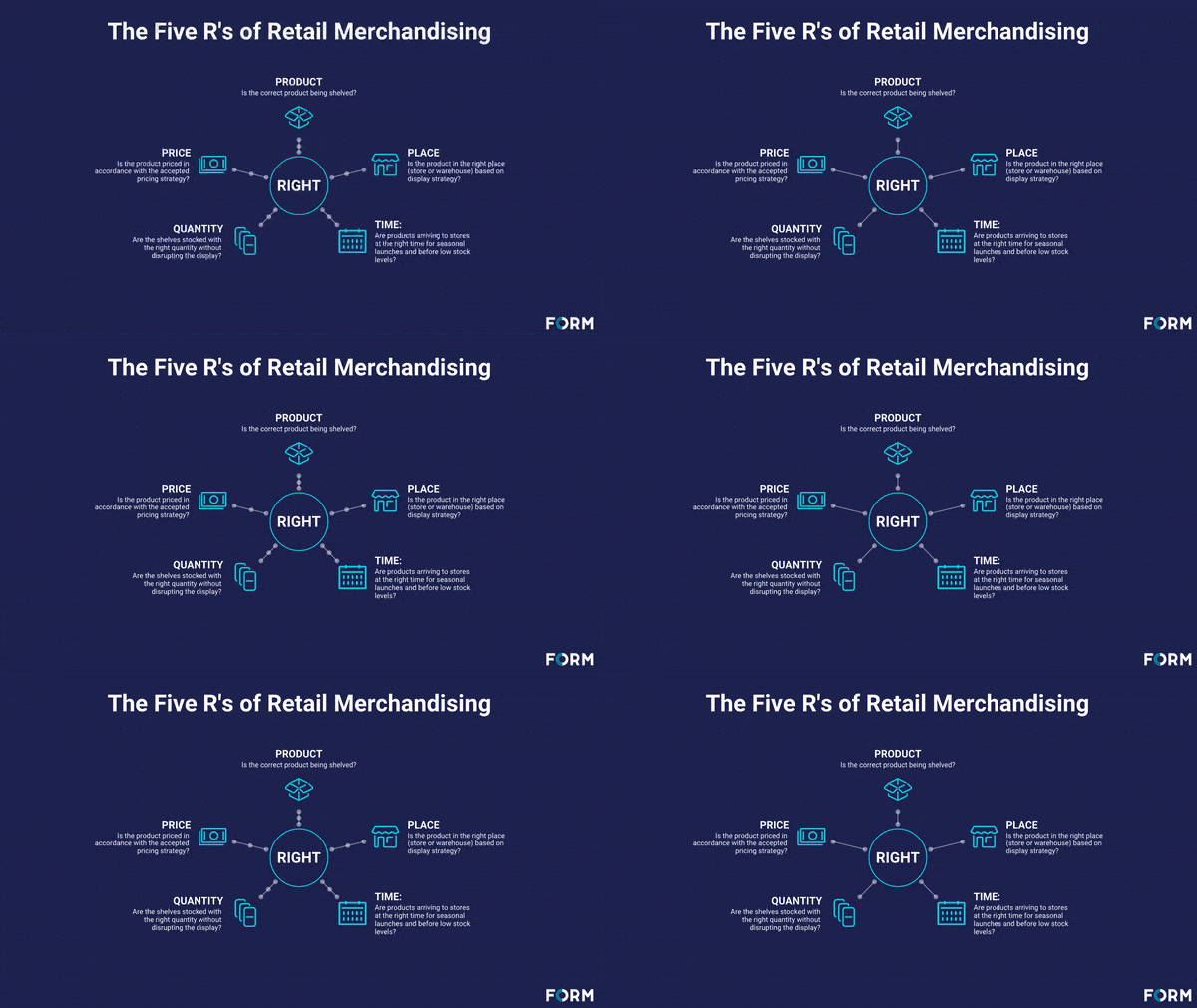
These five benchmarks ensure that a retail merchandiser presents products in an optimal way to capture shopper attention and drive sales.
Other benchmarks of a successful merchandising strategy may include:
- Consistency: Are shelves consistently stocked with the right products?
- Creativity: How visually appealing are displays? Do they capture shoppers’ attention?
- Agility: How easily can merchandising efforts adapt to seasonal demand and shifting trends?
During the height of COVID lockdowns, for example, there was a 167% increase in demand for top-half apparel categories—a massive opportunity for merchandisers in both online and in-store environments.
What Are Ideal Retail Merchandiser Skills?
Merchandising experience refers to the practical skills retail merchandisers develop while managing product displays, executing planograms, monitoring inventory levels, and maintaining consistent in-store presentation across locations.
An ideal retail merchandiser has many of the skills needed for marketing, sales, and analysis, but combines them into one role along with other valuable traits, including:
- Ambition: Much of merchandising requires driving across a region to complete store audits.
- Attention to detail: Setting up displays and following planograms requires a keen eye for detail to maximize consistency and customer experience.
- Market awareness: Understanding and applying recent trends and sales figures is crucial in stocking and display strategies.
- Retail tech familiarity: Seeking out ways to increase efficiency across locations should be a key part of a merchandiser’s job. Intuitive retail technology, like the GoSpotCheck by FORM mobile app, helps merchandisers streamline in-store execution and verify displays with real-time photo proof.
Making the Most of Merchandising
While shoppers may only see them stocking shelves, merchandisers play a valuable role in the retail environment. By ensuring that a manufacturer’s products are properly and attractively displayed, a retail merchandiser can help brands sell and succeed.
Even if you don’t have your own team of merchandisers, it’s still possible to execute an effective merchandising strategy with third-party retail support.
FORM has partnered with retail service Customer Impact to deploy qualified retail specialists who complete market execution and merchandising tasks for brands and retailers. Customer Impact representatives use FORM’s mobile solution to deliver valuable insights into merchandising, market share, and retail performance.
GoSpotCheck by FORM is the leading retail mobile app that helps merchandisers and retail teams track execution, distribute tasks, and ensure compliance at every store.
Frequently Asked Questions About The Role of a Retail Merchandiser
What industries employ retail merchandisers?
Retail merchandisers work across many industries, including grocery, consumer packaged goods (CPG), apparel, electronics, and big-box retail. In these environments, a retail merchandiser helps ensure products are displayed correctly, stocked consistently, and promoted according to a brand’s merchandising strategy.
How do retail merchandisers use data to improve product performance?
Retail merchandisers often analyze store data such as sales performance, inventory levels, and shopper trends to refine product placement and promotional displays. By combining store-level insights with a broader merchandising strategy, merchandisers can adjust displays and product positioning to improve visibility and sales outcomes.
What tools do modern retail merchandisers use?
Many retail teams now rely on mobile retail execution platforms to manage store visits, track compliance, and collect in-store data. These tools allow a retail merchandiser to capture photos of displays, complete store audits, and report issues quickly while maintaining consistent execution across locations.
What is the difference between visual merchandising and retail merchandising?
Visual merchandising focuses primarily on the aesthetics of product displays and store presentation. Retail merchandising, on the other hand, includes a broader set of responsibilities such as inventory placement, store audits, promotional setup, and executing a company’s overall merchandising strategy.
How does merchandising impact retail sales?
Effective merchandising can significantly influence buying behavior. When products are displayed clearly, stocked consistently, and positioned strategically, shoppers are more likely to notice them and make impulse purchases. This is why a strong merchandising strategy plays an important role in retail performance.