


Key Takeaways
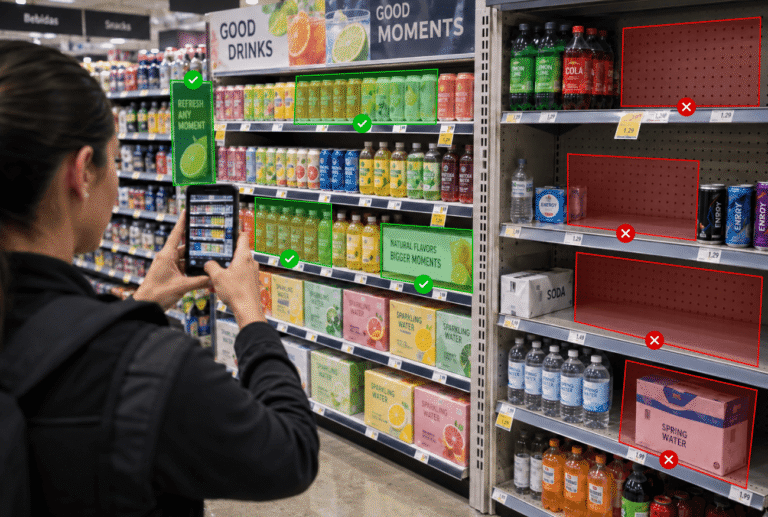
- Point-of-sale materials (POSM) drive an estimated 60% of purchase decisions in store, and brands invest 12–20% of total revenue in them. Yet most have no scalable way to confirm they have ever reached the shelf.
- POSM Compliance AI, a new capability in GoSpotCheck by FORM, automatically detects and reports on point-of-sale materials the moment a field rep captures a store photo.
- The model recognizes new POSM designs from day one, with no training period, and holds up in real-world conditions, such as cluttered shelves, partial visibility, damage, and obstruction.
- For brands, this closes the gap between funding a display and knowing it worked; for retailers, it replaces manual audits with a scalable way to enforce display and merchandising standards across every location.
What Is POSM Compliance AI?
 POSM Compliance AI is an image recognition capability built into GoSpotCheck by FORM that answers a question neither brands nor retailers have been able to answer at scale: did the point-of-sale material actually make it to the shelf, is it placed correctly, and is it doing its job?
In regulated categories like tobacco, where the product itself can’t be displayed openly, POSM effectively is the brand message. Across categories, that adds up to millions of dollars in materials that brands fund but rarely get to verify in place, and that retailers are responsible for hosting correctly, often across thousands of locations with limited staff time to check. The investment leaves the warehouse, campaign briefs go out to the field or the store, and then everyone waits. Brands eventually check sales data and try to work backward to what likely happened in stores; retailers rely on spot checks or store manager reports.
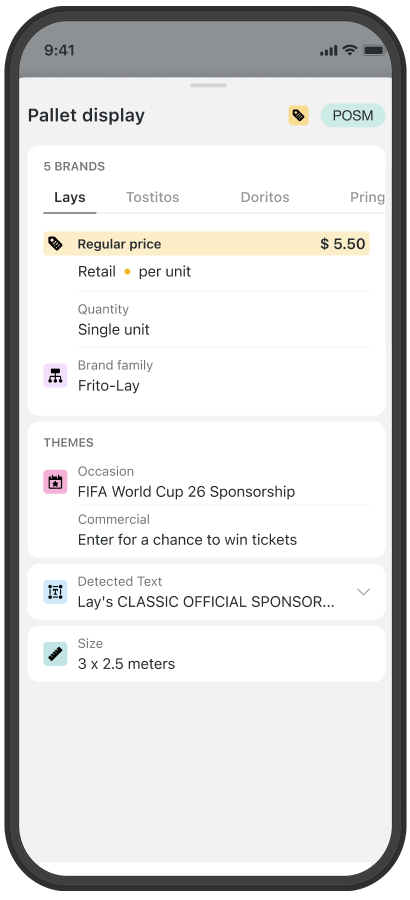
POSM Compliance AI closes that gap for both sides. It turns every store photo, whether captured by a brand’s field rep or a retailer’s own store team, into structured, actionable data: what type of display it is, which brand and campaign it belongs to, and what it’s pricing, read the way merchandising teams would scan it walking down the aisle.
Why Shipping POSM Isn’t the Same as Executing It
For many brands, shipping POSM to a distribution center or handing it to a field team is treated as the finish line. If the material was produced and sent, the assumption is that it’s working somewhere in the store. Retailers face the mirror version of the same problem: once a display arrives and is signed for, there’s often no efficient way to confirm it was built, positioned correctly, and kept in good condition across every location it’s meant to be in. Producing POSM and executing it correctly are two very different things, and confusing one for the other is one of the most expensive blind spots in retail marketing and merchandising alike.
A display can be delivered to a store and still fail to do its job, in a few consistent ways:
- Placed incorrectly or never assembled at all: The material sits in a back room instead of the shelf or endcap it was designed for.
- Damaged or missing pricing information: The display is up, but it isn’t in a condition that would influence a shopper.
- Inconsistent from store to store: The same campaign looks nothing alike across locations, eroding brand presence and undermining the retailer’s own merchandising standards at once.
- Invisible between visits: Without automated recognition, neither the brand nor the retailer knows whether a display is still standing until someone happens to check.
In every case, the campaign’s return on investment quietly evaporates, regardless of how much was spent designing and producing the material, and regardless of whether the retailer’s own standards were technically met on paper. This is the production-versus-execution gap, and POSM has long been one of retail’s hardest recognition problems to close: materials get lost in cluttered store photos, look nearly identical across campaigns, and rotate too fast to build the real-world data a model would need to catch up.
The Role of POSM Compliance in Retail Growth
POSM execution is a direct driver of campaign ROI and brand presence at shelf, and it’s just as directly tied to a retailer’s own merchandising standards and the strength of its supplier relationships. Whether a display was placed correctly, activated on time, and kept in good condition determines whether trade spend reaches the shopper, and whether a retailer can back up its compliance claims with evidence rather than assumptions.
For brands, verifying execution consistently across the network unlocks:
- Trade spend that’s measured, not assumed: Instead of finding out weeks later whether a campaign landed, brands can verify execution as it happens and redirect budget to what’s driving sell-through.
- Full visibility into product launches and seasonal campaigns: Knowing whether materials are correctly deployed across every outlet means adjustments can happen before the campaign window closes, not after.
- Proof, not self-reported compliance: Verified execution data becomes the basis for retailer conversations, backed by evidence instead of assumptions.
For retailers, the same data unlocks:
- Compliance across stores: Retailers running their own-brand and supplier-funded programs get a scalable way to confirm display standards without manual, store-by-store checks.
- A stronger negotiating position with suppliers: Retailers can show brands objective, store-level proof of execution quality, strengthening the case for continued or expanded trade spend.
- Consistent merchandising standards: Store-level data makes it possible to spot and correct execution gaps store by store, rather than relying on manager self-reporting.
How POSM Compliance AI Works
Three simple steps take a photo from your team’s phone to a full picture of what’s happening in store:

1. Image Capture
Field and store teams use the GoSpotCheck mobile app to capture images of in-store execution as part of their normal daily tasks.

2. POSM Detection
Once an image is submitted, our AI model scans it and identifies each POSM as a distinct object, separating it from surrounding shelves, products, and store clutter.
3. Classification & Reporting
Each POSM is classified by type, brand, campaign theme, and key attributes like pricing and product information, with data available on-device for field teams and in GoSpotCheck's photo reporting dashboard for leaders.
The Bottom Line
Brands have spent years pouring investment into POSM without a reliable way to know if it ever reached the shelf. Retailers have spent just as long trying to enforce display and merchandising standards without a scalable way to check them. POSM Compliance AI changes both. It gives brands and retailers a shared, automated way to verify what’s happening in stores, connect that execution to sales outcomes, and make smarter calls about where trade spend and merchandising attention go next.
Ready to see POSM Compliance AI in action? Book a demo and see how we help brand and retailer teams verify in-store execution, protect trade spend ROI, and turn every store photo into proof.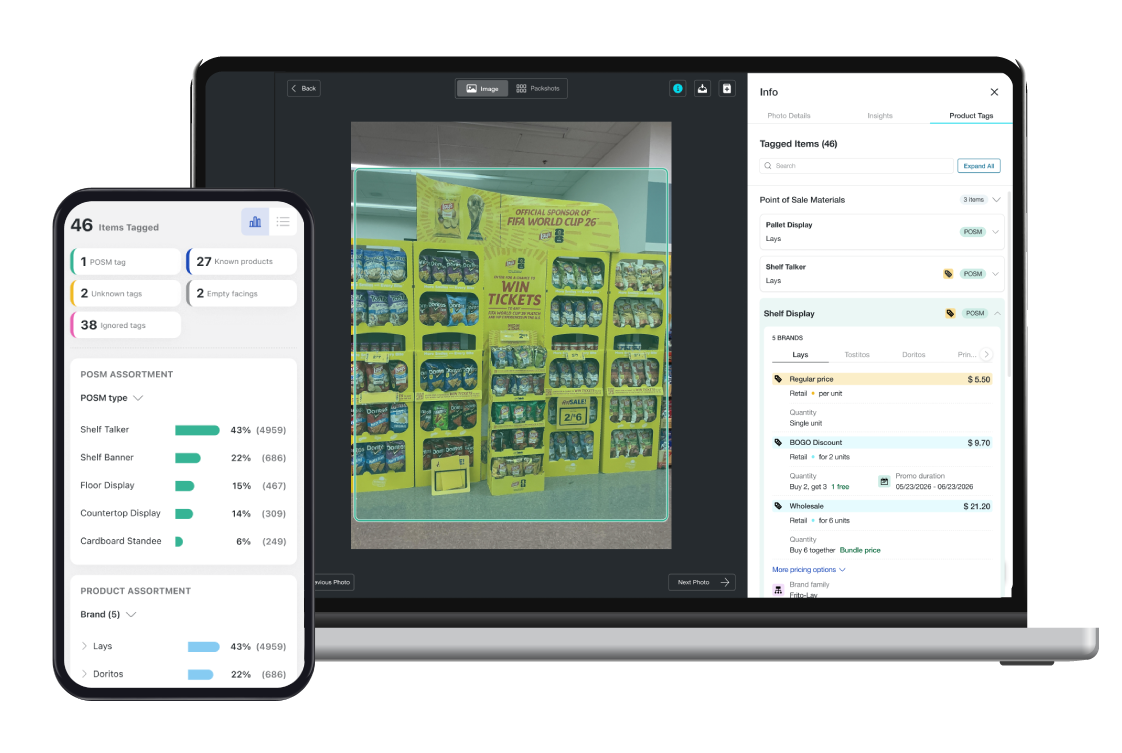
Frequently Asked Questions
How does POSM Compliance AI detect materials it hasn’t seen before?
The model uses Day 1 recognition, meaning it identifies new POSM designs from the very first store visit rather than requiring a training or ramp-up period. It’s built to hold up in real-world field conditions, including materials that are partially visible, damaged, or obstructed by store clutter.
What data does POSM Compliance AI capture beyond just detecting a display?
Beyond identifying that a POSM exists, the model classifies its type, brand, size, and campaign theme, and extracts pricing detail including value, currency, promotion type, quantity required, and promotion dates. It also assigns a campaign theme category, so both brand and retailer teams understand not just what’s deployed, but why.
Does POSM Compliance AI work across different currencies and languages?
Yes. Pricing detection covers multiple currencies, and the model reads POSM text across multiple languages, so global brands and retailers get consistent detection whether they’re operating in one market or dozens.