


As consumer packaged goods (CPG) brands navigate an increasingly volatile retail landscape, AI in CPG has evolved from a “nice-to-have” analytics tool into a core operational engine. Ali Moosani, CEO of FORM, explains how AI CPG technology—particularly image recognition and agentic AI—is redefining what it means to be “Smarter at the Shelf”. As leading research from McKinsey shows, the real value of a digital and AI transformation in CPG lies in its ability to drive growth through operational scale.
He outlines how modern brands are moving beyond static data toward real-time shelf agility and the strategic foundation for autonomous AI-driven execution.
A conversation with Ali Moosani, the CEO of FORM, on how artificial intelligence is transforming the consumer packaged goods business. Originally published by Angela Scott-Briggs of TechBullion on May 1, 2025. Read the article here.

Over the past couple of years, artificial intelligence (AI) has become an integral tool in consumer packaged goods (CPG) companies’ toolboxes—one that can provide a clear competitive edge in a volatile retail environment. Indeed, a 2024 McKinsey & Company survey of CPG leaders showed that 71 percent had adopted AI in at last one part of their business, demonstrating that the evolution of AI is shifting how brands manage operations, engage customers, and execute strategy in real time.
As the CEO of FORM, which provides mobile software solutions for teams in the field, Ali Moosani is on the frontlines of AI integration into the CPG space. We sat down with Moosani to discuss how AI is driving swift decision-making, how augmented reality can be used in retail environments, and why AI agents may become field teams’ best friends.
What is AI in CPG? Defining the Shift to Agentic Retail
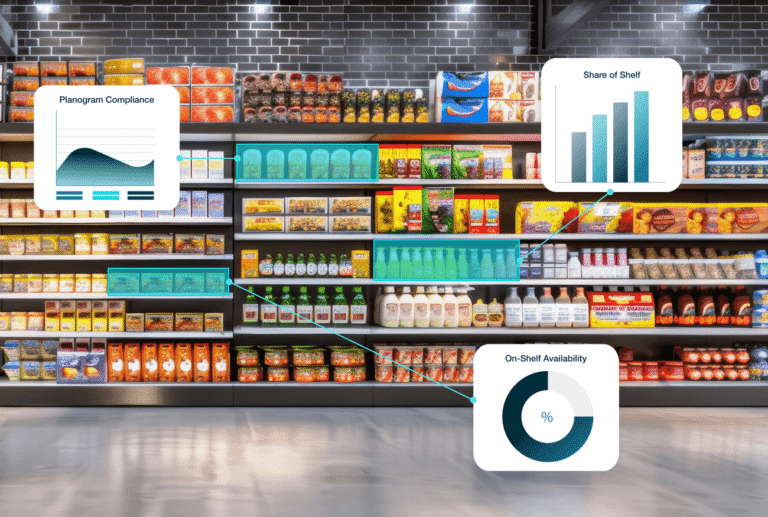
AI in CPG (Consumer Packaged Goods) refers to the integration of machine learning, image recognition, and autonomous agents into the retail supply chain. While traditional consumer packaged goods tools focused on historical data analysis, modern technology enables real-time, SKU-level visibility. By utilizing advanced shelf intelligence tools, field teams can fix out-of-stocks and compliance gaps instantly, reflecting the latest image recognition technology trends in the AI in consumer packaged goods market.
The Interview: Strategizing for the Shelf-First Era
The following discussion features Ali Moosani, CEO of FORM, in a deep-dive conversation regarding the operational realities of AI in the consumer packaged goods market. While the retail landscape has shifted toward autonomous solutions, the core challenges of visibility and execution remain constant. Below, Moosani outlines the roadmap for brands looking to leverage AI CPG data for a competitive edge.
Q: How is AI in CPG fundamentally changing the industry today?
CPG companies have traditionally been reliant on manual audits, retrospective data, and generalized marketing tactics. That’s changed significantly: These businesses are now using AI in forecasting, personalizing promotions, streamlining shelf monitoring, and optimizing supply chains. Technologies like augmented reality (AR) and AI agents allow brands to quickly gain more accurate insights than they have even in the recent past. AI is not only improving efficiency, but it’s also transforming field teams into real-time decision-makers.
Q: How does AR and image-recognition in AI CPG directly assist brand teams when they’re in the field?
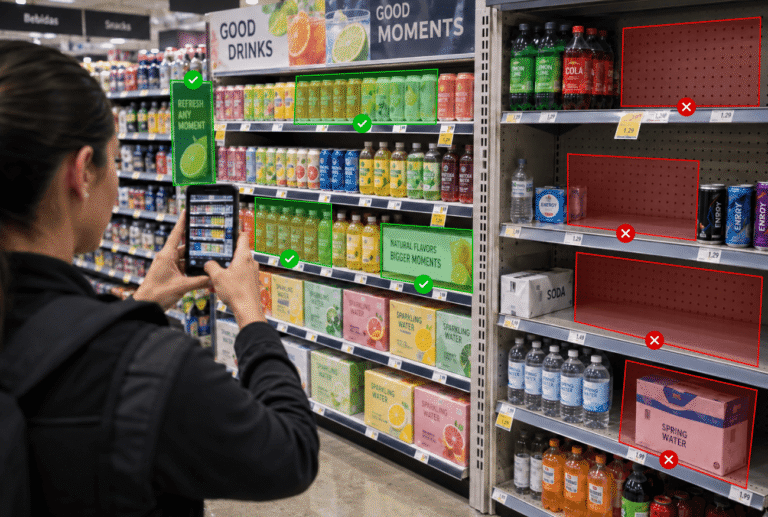
These technologies can spot an issue, ID the affected products, and allow a team, while they’re on-site, to make informed, immediate decisions. So, for example, say you have subpar shelf conditions at a retailer. AR lets field team members use their device’s camera to view shelves with real-time data layered on top—highlighting things like missing products, pricing issues, or layout problems. It’s a fast, functional way to turn unstructured shelf conditions into actionable insights, which gives teams a new level of responsiveness at retail.
Q: In the broader context of AI in CPG, field teams are now employing embedded AI agents within their retail software, correct?
That’s right. AI has the potential to boost productivity, especially for frontline reps who often operate with limited information while trying to optimize shelf conditions under time and resource constraints. By using mobile software with embedded AI agents, reps can get real-time insights and guided decision-making that can streamline their tasks. Instead of relying on spreadsheets, which may be out of date, or static planograms, they can ask the AI agent specific questions and receive clear, data-driven answers instantly.
Q: Regarding FORM's integration of AI CPG agents into GoSpotCheck, how does this specific technology work for the end user?
GoSpotCheck already allowed field reps to gather shelf data using image recognition—for example, detecting things like out-of-stocks, pricing discrepancies, and planogram compliance. Now, GoSpotCheck, when paired with Salesforce Consumer Goods Cloud, pushes this further by not just analyzing, but also prescribing actions—instantly, at the shelf. The AI agent can tell teams what to do next, like offering a discount based on the shelf presence. The bottom line is that the AI agent helps field reps make faster, smarter decisions on the spot.
Q: What do you say to those concerned that the rise of AI in CPG and autonomous agents will replace human workers in the field?
Field teams aren’t going anywhere. Things like AR and AI agents aren’t replacements for people; they free field reps up from tedious tasks like documentation and audits and allow them to focus on building relationships and executing strategy. AI augments human abilities and drives growth. It doesn’t replace them.
The Path Forward: Scaling AI in CPG for 2026 and Beyond
The insights shared in this discussion highlight a critical truth for the industry: the future of AI in CPG is no longer just about seeing the shelf—it’s about the ability to act on it in real-time. As we move further into the era of agentic AI, the transition from manual data collection to autonomous “shelf intelligence” has become the primary differentiator for market leaders.
By leveraging AI CPG tools like GoSpotCheck, brands can finally close the loop between their “Perfect Store” vision and real-world execution. The conversation has shifted from “Can AI help?” to “How fast can our AI agents respond?” and the brands that embrace this agility today will be the ones that own the shelf tomorrow.